


 Lamps
Lamps


 Sale
Sale
 Help
Help

LED Lighting - Everything you need to know about LED
Search
LED Lighting: The Complete Guide to Modern LED Lights
We've put together a series of articles about LED lighting for you to explore. Click a link below to jump into a more in-depth LED topic, or read on for an overview.
What LED lighting makes possible
How to install LED light bulbs
Environmental impact of LED lighting
LED maintenance and troubleshooting
A brief history of LED lighting
LED lighting frequently asked questions
Overview
LED lighting has moved from a specialized technology used in indicator lights and electronics to one of the most important lighting technologies used in homes, businesses, outdoor spaces, and modern light fixtures. If you are replacing an old bulb, remodeling a room, choosing a new LED light fixture, or simply trying to understand why LED has become so common, there is more to the subject than simply choosing a lower-wattage bulb.
The most useful way to understand LED lighting is to think about it as a combination of efficiency, electronics, light quality, design flexibility, and control. LEDs can use much less electricity than incandescent lighting, last far longer, produce light in a wide range of colors and intensities, and can be built into shapes and fixtures that were difficult or impractical with older technologies. The result is not simply a better light bulb. LED technology has changed what a light fixture can be and what lighting can do in a room.


What Is LED Lighting?
LED stands for light-emitting diode. An LED is a semiconductor device that produces light when electrical current passes through it. Instead of heating a filament until it glows, as an incandescent bulb does, an LED produces light through electroluminescence. Electrons and holes within the semiconductor recombine and release energy as photons, which we see as light.
The small semiconductor component is only one part of a finished LED bulb or fixture. A complete LED lighting product may also contain a driver, heat-management components, optics or a diffuser, and a housing designed to protect the electronics and control the light.
That distinction matters because modern LED lighting is really an electronic lighting system. This helps explain why LEDs can offer dimming, color tuning, smart controls, directional light, and very compact fixture designs.
Why Has LED Lighting Become So Important?
LED lighting became popular because it combines several advantages that are difficult for older technologies to match. LEDs can produce the same useful amount of light with substantially less electrical power than incandescent lamps, and they generally have much longer rated lives. The U.S. Department of Energy recommends comparing lamps by lumens, which measure light output, rather than watts, which measure electrical power input. For example, an 800-lumen replacement for a traditional 60-watt incandescent may use only a fraction of the power. DOE guidance provides current examples of LED power requirements for equivalent lumen outputs.
LEDs also provide designers with much greater freedom. Because the light source can be small, distributed, directional, dimmable, tunable, or hidden inside a fixture, designers can create ultra-thin ceiling lights, linear pendants, illuminated mirrors, flexible accent lighting, architectural strips, sculptural chandeliers, and integrated fixtures with very different visual characteristics from traditional lamps.


LED vs. Incandescent, Halogen, and CFL Lighting
For many consumers, the first question is simply whether changing to LED is worthwhile. In most common household applications, the answer is yes, but the reason is not just energy efficiency.
- Incandescent: produces light by heating a filament, uses much more energy, and has a relatively short life.
- Halogen: is a more efficient form of incandescent lighting but still produces significant heat and generally has a much shorter life than LED.
- CFL: is more efficient than incandescent and has a longer life, but uses fluorescent technology and contains mercury.
- LED: uses semiconductor technology, offers high efficiency, long life, flexible light characteristics, and a wide range of fixture and control possibilities.
There are still situations where the qualities of another light source may appeal to someone, especially where a particular appearance, dimming behavior, or fixture tradition is important. The point is not that every LED is automatically the best possible lighting choice. The point is that LED gives you an unusually broad set of choices.

The Most Important LED Specifications
Once you move beyond the basic question of “LED or not LED,” the important decisions become more specific.
Lumens: How Much Light Do You Need?
Lumens describe visible light output. A higher lumen rating generally means more light, but more light is not always better. The right amount depends on the room, the task, the fixture, the distribution of light, and the atmosphere you want to create.
Color Temperature: How Warm or Cool Should the Light Look?
Color temperature is expressed in Kelvin. Warm white LED lighting around 2700K tends to look more yellow and relaxed, while higher color temperatures appear progressively whiter or cooler. A major practical question is not simply “What Kelvin number is best?” but “What atmosphere and function do I want in this room?”
CRI: How Naturally Will Colors Look?
Color Rendering Index, or CRI, describes how accurately a light source reveals colors compared with a reference source. High CRI lighting can be especially valuable in kitchens, dressing areas, art spaces, retail environments, and anywhere color appearance matters.
Beam Angle and Distribution
Beam angle helps determine whether light is concentrated or spread across a wider area. Directional LED lighting can be excellent for accent and task lighting, while broader distributions are more appropriate for general illumination.
Dimming and Compatibility
Not all LED bulbs and fixtures behave the same way with dimmers. A dimmable LED product needs to be compatible with the dimmer and control system being used. Incompatible combinations can cause flicker, buzzing, poor dimming range, or failure to operate correctly.
Integrated LED or Replaceable Bulb?
Integrated LED fixtures have the light source and electronics built into the fixture. They can be extremely slim and visually clean. Replaceable LED bulbs offer flexibility because the bulb can be changed without replacing the entire fixture. Neither is automatically better; the right choice depends on the fixture design, serviceability, expected use, and your priorities.


How to Choose the Right LED Light
A good LED purchase starts with the situation rather than the product name. Before looking at individual bulbs or fixtures, ask what the light needs to accomplish.
- What room or area are you lighting?
- Do you need general, task, ambient, accent, or decorative light?
- How much light do you need?
- Do you prefer warm, neutral, or cool-looking light?
- Does accurate color matter?
- Will the light be dimmed?
- Is the fixture indoors, outdoors, damp, or wet?
- Does the light need to fit an enclosed fixture?
- Do you need a replaceable bulb or are you comfortable with integrated LED?
- Do smart controls or color changing matter?
Once those questions are answered, the enormous LED market becomes much easier to narrow down. This is one of the biggest advantages of LED technology: the technology gives you more options, but a good selection process prevents those options from becoming overwhelming.
LED Lighting for Different Rooms
LED lighting can be tailored to nearly every part of the home, but the best solution changes with the room.
Living Rooms
Living rooms often benefit from layers of ambient, task, and accent light. A combination of ceiling lighting, table lamps, floor lamps, sconces, and indirect LED lighting can make the room much more flexible than a single bright overhead fixture.
Kitchens
Kitchens often need strong task lighting as well as decorative fixtures. Under-cabinet LED lighting can reduce shadows on countertops, while LED pendants over an island can provide both focused illumination and visual interest.
Bedrooms
Bedrooms usually benefit from warmer, softer light and convenient dimming. Bedside lamps and low-level accent lighting can provide useful illumination without making the room feel overly bright.
Bathrooms
Bathrooms require careful attention to fixture ratings, glare, and facial illumination. Vanity lighting should provide even light without creating harsh shadows, while fixtures in wet or damp locations must be designed and rated for those conditions.
Dining Rooms
Dining rooms are especially sensitive to brightness, color temperature, fixture scale, and dimming. LED chandeliers and pendants can provide a strong focal point while allowing the room to shift from practical meal lighting to softer entertaining light.
Home Offices
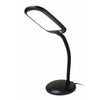
Home offices need comfortable task lighting and controlled glare. LED desk lamps, ceiling fixtures, and adjustable task lighting can be combined to provide enough illumination without making screens uncomfortable.


What LED Technology Makes Possible
One of the most interesting parts of LED lighting is not simply that LEDs consume less energy. The technology has changed fixture design itself. LEDs can be embedded into thin surfaces, flexible strips, curved forms, furniture, mirrors, architectural details, and sculptural fixtures. This has allowed lighting designers to create forms that would have been difficult to build around a traditional filament bulb or fluorescent tube.
Modern LED lighting can therefore be both a source of illumination and a design element. A light can disappear into an architectural detail, become a glowing line, act as a decorative sculpture, or change its color and intensity throughout the day.
LED Costs and Energy Savings
LEDs usually cost more upfront than a basic incandescent bulb, but that purchase price is only one part of the economics. A useful comparison includes purchase price, wattage, hours of operation, electricity rate, expected life, and replacement costs. The easiest way to understand the result is to calculate the annual operating cost of the old bulb and compare it with the LED replacement.


Installing, Maintaining, and Troubleshooting LED Lighting
LED lighting is generally straightforward to use, but installation and compatibility still matter. Replacement bulbs should match the fixture's base and size, dimmable products should be paired with compatible controls, and enclosed or wet locations require appropriate products. When an LED flickers, buzzes, becomes unusually hot, or changes color, the cause may be compatibility, heat, driver, wiring, or product quality rather than simply “the LED is bad.”
Environmental Impact and Recycling
Lower electricity consumption can reduce the environmental impact associated with generating that electricity, while longer life can reduce the number of replacements needed. At the end of life, however, an LED product still contains electronic components and valuable materials, so responsible disposal or recycling is preferable where programs exist. Sustainability is therefore about the whole product lifecycle, not simply the amount of electricity it uses.


LED Lighting Laws and Regulations
U.S. lighting regulations are another reason it is useful to understand LED technology. The Department of Energy has adopted amended efficiency standards for general service lamps that require compliance on and after July 25, 2028. The standards are part of a broader transition toward more efficient lighting products. DOE maintains the current general-service-lamp requirements and updates.
Because regulations can change, this topic should be treated as a living resource rather than a timeless statement. Consumers, manufacturers, and retailers can face different requirements, and not every specialty lamp falls under the same rules.
Where to Go Next
LED lighting is broad enough that most people do not need to learn every technical detail before making a good decision. Start with the job the light needs to perform, narrow the important characteristics, and then compare products that fit those requirements.
Use the guides in this LED series to go deeper into the areas that matter to your project, and use the relevant product and category recommendations to move from information to action. The goal is not to become an LED engineer. The goal is to understand enough to choose lighting that works for your space, your needs, and your priorities.

What We Would Do First
If you are unsure where to begin, do not start by comparing hundreds of LED products. Start with the problem. If you are replacing a bulb, identify the existing bulb and fixture. If a room is too dark, determine where the useful light is missing. If you are remodeling, identify what activities the room needs to support.
Our recommendation: define the lighting job first, then narrow the products. This usually eliminates most of the catalog before you ever need to compare individual fixtures.
If You Are Replacing an Existing Bulb
Photograph the old bulb and fixture. Note the base, approximate size, lumen output if available, color temperature, and whether a dimmer or enclosed fixture is involved. Then choose an LED that matches the important characteristics rather than simply matching the old wattage.
If a Room Feels Too Dark
Do not automatically install the brightest LED you can find. Ask where the problem is. If the countertop is dark, add task lighting. If a reading chair is dark, add a reading lamp. If the room has bright spots but still feels dull, improve distribution or add another layer of ambient light.
If You Are Choosing a New Fixture
Decide whether you need general, task, ambient, accent, or decorative light. Then narrow by room, fixture size, distribution, color temperature, dimming, and environmental rating.

The Decision Sequence We Recommend
1. Define the job. What do you need the light to accomplish?
2. Choose the light level. How much useful illumination is needed?
3. Choose the appearance. Warm, neutral, or cool?
4. Choose light quality. Does CRI, glare control, or consistency matter?
5. Choose control. Fixed, dimmable, tunable, or smart?
6. Confirm compatibility. Base, dimensions, enclosure, location, voltage, and controls.
7. Compare products. Only now compare price, finish, brand, design, warranty, and other preferences.
That sequence turns LED shopping from an inventory problem into a decision that can be solved.
Explore Topics

Table of Contents
LED Lighting - Everything you need to know about LEDLED Lighting: The Complete Guide to Modern LED LightsOverviewWhat Is LED Lighting?Why Has LED Lighting Become So Important?LED vs. Incandescent, Halogen, and CFL LightingThe Most Important LED SpecificationsHow to Choose the Right LED LightLED Lighting for Different RoomsWhat LED Technology Makes PossibleLED Costs and Energy SavingsInstalling, Maintaining, and Troubleshooting LED LightingEnvironmental Impact and RecyclingLED Lighting Laws and RegulationsWhere to Go NextWhat We Would Do FirstThe Decision Sequence We RecommendCommentsShopping Ideas


Trending




Comments