


 Lamps
Lamps


 Sale
Sale
 Help
Help
Light Bulb Buying Guide
Search
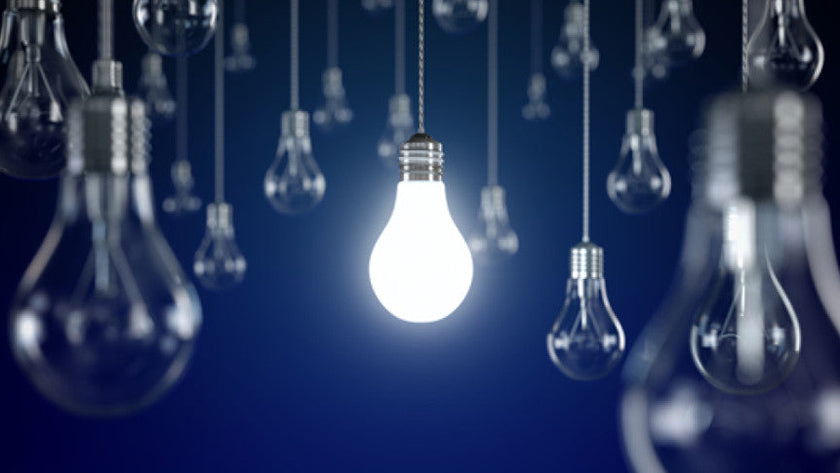
For optimal light output, we need to find the best bulb to get the job done. Fortunately today you have lots of great choices and bulb innovations are rampant. Over the next ten years, light bulbs will make a complete change. Today we have four main types of light bulbs, incandescent, halogen, fluorescent and LED (light emitting diode).
1. Incandescent
The most common bulb used in lamps today because they are inexpensive, dimmable and widely available. Common incandescent bulbs vary from 15 to 150 watts and produce a warm, soft yellow-white light, emitted in all directions. They are generally available in clear, frosted, or colored. Incandescent bulbs are great for standard ambient lighting and higher wattages are good for task lighting. (Never exceed the maximum wattage recommended for your lamp!)
The problem with incandescent light bulbs is that they are not very efficient. If you ever touched a 100 watt bulb, you know it is HOT!. 90% of that 100 watts is wasted in unneeded heat! All the uproar you have heard about "banning light bulbs" is related to inefficient incandescent bulbs. The Energy Independence and Security Act of 2007 is designed to help America convert to more efficient sources. However, regular CFL bulbs are not always compatible with dimmers, and may have other light quality issues.
2. Halogen
Many of today's lamps use halogen bulbs, which produce a bright, crisp, white light. They most closely replicate the color spectrum of the sun. Halogen bulbs have a longer life and provide more light (lumens) per watt than regular incandescent bulbs. Their small size and intensity make halogens great for task lighting. Like incandescents, Halogen bulbs waste most of their energy in heat. Since halogen bulbs burn hotter than other types, they require more caution. All halogen lamps sold today in the USA have approved safety shields to reduce fire risk. When changing a halogen bulb, be sure to wait until the bulb cools to touch it. Always use a clean rag to handle a halogen bulb, as oils from your hand will cause the bulb to burn hotter and can greatly reduce the life of your bulb.
3. Fluorescent
A very energy efficient bulb, using 50-75% less electricity than standard incandescent bulbs, and can last up to 20 times longer. Many new compact styles make fluorescent bulbs practical for task lighting. Screw-in types can be used in place of incandescent bulbs in standard lamp sockets. Fluorescent lighting feature a soft, diffused light. Fluorescent light bulbs are currently still popular because they are relatively low priced and very efficient. But they are difficult to dim and do not always produce the warm yellow light homeowners expect. Plus fluorescent bulbs do contain a trace of mercury and require special disposal handling.
4. LED
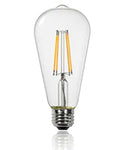
LED means light emitting diode, a semiconductor that emits light when electricity passes through it. LED bulbs are MUCH more common today and you may find them in lamps, accent and outdoor lights. LED bulbs last up to 20 times longer than traditional incandescent bulbs. Imagine not changing a bulb for 17 years! (great for hard-to-reach lights.) LEDs produce almost no heat or UV rays, all while using 80% less energy! Holding back LEDs is the high cost. You could pay $30-$60 for one bulb, but they can pay for themselves over time. Plus prices are coming down all the time! Many LED lights are fully dimmable, and contain NO mercury. By 2020, most bulbs sold will be LED. One popular application of LED bulbs is in replacement cans for recessed lights.
Of course, the amount of light produced from a lamp is also dependent on the type of lamp shade surrounding the bulb, so keep that in mind when selecting your light bulbs.
Explore Topics

Shopping Ideas




Trending














Comments