


 Lamps
Lamps


 Sale
Sale
 Help
Help
Atomic Clocks
Search
Imagine owning a clock so smart it sets itself automatically
...and remembers to correct itself for daylight-saving time. The radio-controlled clock will do all this for you. Self setting clocks are not only the ultimate in convenience, they're also the ultimate for accuracy- you will always have the exact time!
Atomic Clocks
Atomic clocks receive a radio signal from the most accurate clock in the world, the cesium atomic clock, transmitted from the National Institute of Standards in Fort Collins, CO. The radio signal that covers the entire United States will keep your clock accurate to within one second over one million years. You'll never have to reset the clock, even for daylight-saving time!
Check the time at time.gov
The US Naval Observatory which operated 70 "atomic clocks" provided the following background information about these clocks: 'A cesium beam atomic clock uses the exact frequency emitted by atoms of the metallic element cesium.
Today, cesium clocks measure frequency with an accuracy of one second in 1,400,000 years! It is the most accurate realization of a unit that mankind has yet achieved. A cesium clock operates by exposing cesium atoms to microwaves until they vibrate and counting the corresponding cycles as a measure of time.
Cesium clocks are of two general kinds: a "laboratory (or primary) standard" about as large as a railroad flatcar and a "commercial (or secondary) standard" about as large as a suitcase. Only a few laboratory standards exist; they are used at research labs for frequency measurements of the highest accuracy.
An example is the NIST-7 standard at the National Institute of Standards and Technology in Boulder, CO. Commercial standards, being industrially produced, are cheaper, but still provide state-of-the-art measurement of precise time.
The U.S. Naval Observatory operates about 70 cesium clocks, and other precision clocks, in 18 vaults whose temperature and humidity are controlled.
The time measurements are made by devices called time-interval counters that compare each clock's time against that of one "Master Clock," whose frequency is steered to match its time to the average of the other clocks.
This time is the Observatory's measure of the atomic time called Coordinated Universal Time (UTC). Some cesium clocks are transported to remote locations in order to synchronize other clocks.
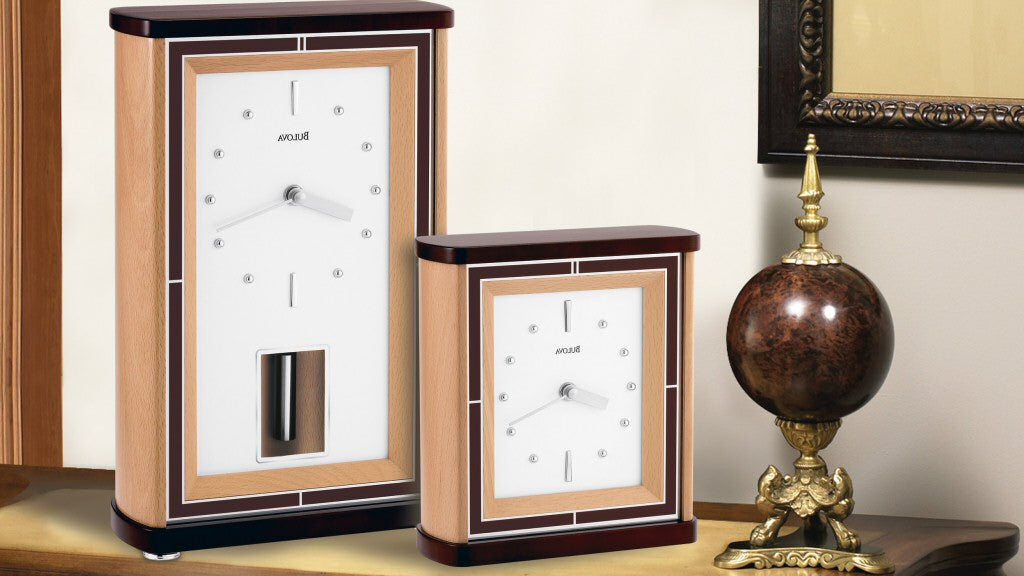
See some Atomic Clocks that can receive the radio signal so that you'll never have to set the time or worry about it being fast or slow again.
Explore Topics

Shopping Ideas




Trending








Comments