


 Lamps
Lamps


 Sale
Sale
 Help
Help
Wait, There Are Bulb Laws? Get in the Know
Search
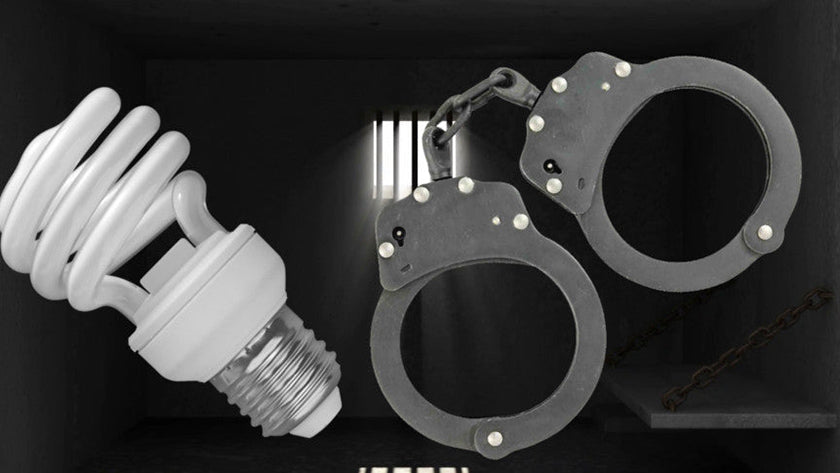
You may be BREAKING the LAW and not even know!
Do you remember the Energy Independence and Security Act of 2007? In an effort to reduce America's energy consumption, this law limits the use of certain sizes of inefficient incandescent light bulbs. There seems to be a lot of confusion around this new law, and what it means to average consumers like you and me.
Just to set things straight:
- No, you won’t be fined or go to jail if you are still using these bulbs after 12/31/2011.
- No, you won’t have to change all of the lamps and lightings in your home.
- No, you are not being forced to switch to fluorescent lighting.
- No, the government is not banning all incandescent light bulbs.
But you will definitely notice some changes and will have to make adjustments. If you get all of the facts and are informed why the change is happening, you will know what to expect when the old bulbs burn out and you need to get new ones.
Q: Why are they picking on incandescent bulbs?
A: The bulbs we are most familiar with the conventional incandescent bulb are much less efficient than other kinds. It only uses 10% of the electricity it uses to create light and the rest becomes heat. When you know that lighting in buildings uses about 14% of the electricity you can see why this new law targeted them as one of the areas where improving energy efficient can make us less dependent on foreign energy sources.
Q: Does this mean that all incandescent bulbs are being banned?
A: No. The law applies only to the pear-shaped, screw in bulbs with a medium base that fit most standard lamps and light fixtures, it will effect only 40, 60, 75, and 100-watt bulbs.
Q: When does the change take place?
A: The changes will happen over time but it will start with 100-watt bulbs first on Jan. 1, 2012, 75-watt bulbs a year later, and 60 and 40-watt bulbs on Jan. 1 2014.
The thing to understand is that the government is not banning these light bulbs. The new law will limit the amount of energy a bulb can use to produce a certain amount of light.
Q: What does this mean to you and me?
A: Here is a quick lesson in Light Bulbs 101. We have gotten used to thinking about light bulbs in terms of watts (which is the measure of the amount of electricity a light bulb uses) which is an inaccurate measure. The move away from incandescent bulbs has highlighted the fact that wattage doesn't measure the brightness; It measures energy. Lumens is the correct standard of measurement for a bulb's brightness.
The old 100 watt light bulb of the past used 100 watts of electricity to produce 1,600 lumens. Under the new standards, bulbs will not be allowed to use more than 72 watts to produce that amount of light.
Q: All of this sounds too complicated. How do we know what do buy when we go shopping for light bulbs?
A: By the middle of this year, light bulb packages will be required to bear a lighting facts label to help the consumer choose bulbs. They are very similar to the nutrition facts label we already see on our food packages.
The label will show the lumens the bulb produces; the number of watts it uses, and the lumens per watt (a measure of the bulb’s efficiency). It will also tell how warm or cool the light is and how true colors will appear under the light If the bulb has mercury the label will note that as well.
Eventually, we will all get used to thinking in terms of lumens when we are picking light bulbs. To make it easier here is a quick conversion guide from the Department of Energy.
- replace a 100-watt incandescent bulb with one that gives you about 1,600 lumens
- replace a 75-watt bulb with one that gives you about 1,100 lumens
- replace a 60-watt bulb with one that gives you about 800 lumens
- replace a 40-watt bulb with one that gives you about 450 lumens
Q: Will the new bulbs fit my old fixtures and lamps?
A: For the most part yes. There are three kinds of energy saving bulbs- compact fluorescent bulbs (CFL), halogen incandescent bulbs, and LED bulbs. Most have screw in bases that are the same size as our old incandescent ones. Make sure to check the dimensions of your old bulbs as some may be larger or smaller in size.
Q: Aren’t these bulbs more expensive?
A: Yes. But they cost significantly less to operate. Your old bulb costs you about $4.80 a year to run according to the Energy Department. A good quality compact fluorescent bulb would cost you about $1.20, and a halogen incandescent bulb $3.50, and a good LED bulb $1.00. With LED and CFL bulbs you will save even more because you won’t have to replace them as often. A compact fluorescent bulb lasts about 10 times longer than the old incandescent bulb, the Energy Department says, while a LED bulb lasts up to 25% longer. Manufacturers are working to make the bulbs more efficient and over time the price on these bulbs will come down .
I hope that makes things clearer. Now that you are informed about what the new law brings it will be easier for you to make your bulb choices. Keep checking back as we will pass on more facts about how you can deal with the changes as new bulbs are developed. If you have additional questions, please call or email the pros at LampsUSA.com. We are here to help!
Explore Topics

Table of Contents
Wait, There Are Bulb Laws? Get in the KnowYou may be BREAKING the LAW and not even know!Q: Why are they picking on incandescent bulbs?Q: Does this mean that all incandescent bulbs are being banned?Q: When does the change take place?Q: What does this mean to you and me?Q: All of this sounds too complicated. How do we know what do buy when we go shopping for light bulbs?Q: Will the new bulbs fit my old fixtures and lamps?Q: Aren’t these bulbs more expensive?CommentsShopping Ideas



Trending







Comments